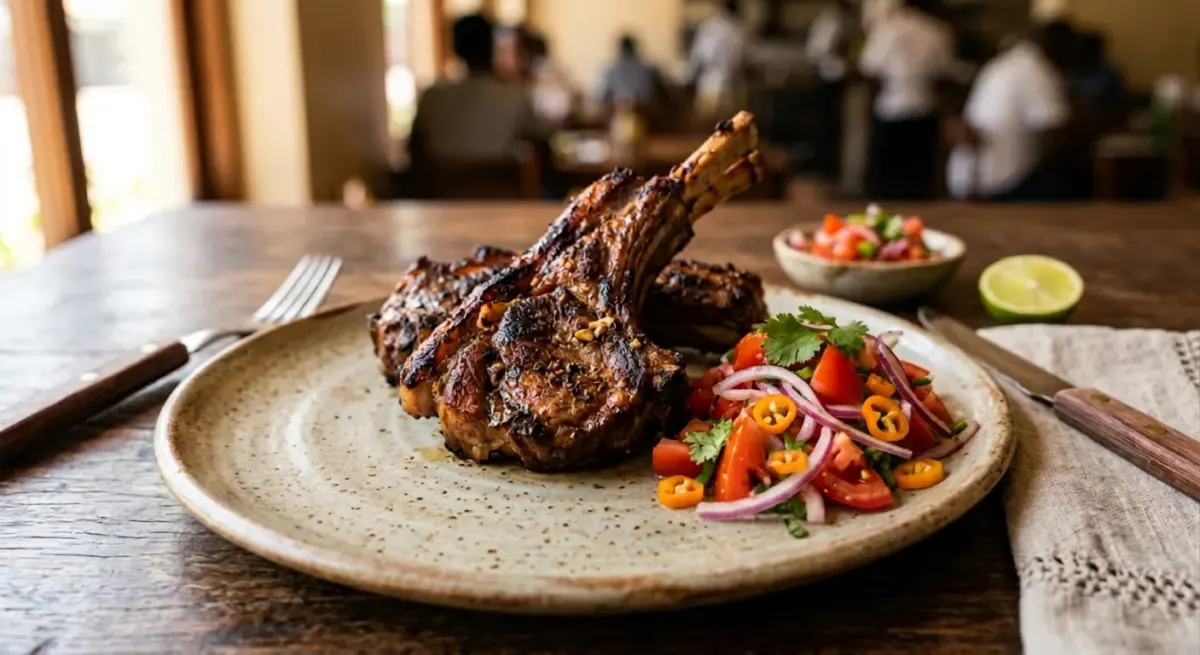
Nyama Choma ya Mbuzi na Kachumbari
Nyama choma — fire-roasted meat — is the cornerstone of East African communal eating, and goat ribs cooked over wood coals represent its most prized expression. The ribs are marinated in a punchy blend of garlic, lime, and chili, then charred over intense heat until the exterior is deeply caramelized and the interior is succulent and smoke-perfumed. Kachumbari, the brilliant sharp salsa of raw tomato, red onion, fresh cilantro, and lime, cuts through the richness with every bite — it is indispensable.
Ingredients
1.8 kg bone-in goat ribs (spare ribs section)
cut into individual ribs, excess fat trimmed to 5 mm, membrane removed from bone side
8 cloves garlic cloves
minced to fine paste
25 g fresh ginger
peeled, grated to paste
2 tsp ground cumin
1.5 tsp ground coriander
1.5 tsp smoked paprika
0.75 tsp cayenne pepper
0.5 tsp ground turmeric
60 ml lime juice
freshly squeezed, approximately 3 limes
45 ml neutral vegetable oil
for marinade
2.5 tsp fine salt
divided — 2 tsp for marinade, 0.5 tsp for kachumbari
1 tsp black pepper
coarsely ground
4 medium ripe firm tomatoes
finely diced, seeds retained for juiciness
1.5 medium red onion
very finely diced, soaked in cold water 10 minutes then drained to remove harshness
30 g fresh coriander
finely chopped, stems and leaves together
1 piece fresh red chili
finely diced, seeds removed for moderate heat
30 ml lime juice for kachumbari
freshly squeezed
0.5 piece cucumber(optional)
peeled, finely diced
600 g ugali or white rice(optional)
cooked, to serve alongside
Prepare Steps
- 1
Marinate the goat ribs(15m)
In a large bowl, combine garlic paste, ginger paste, cumin, coriander, smoked paprika, cayenne, turmeric, 2 tsp salt, black pepper, lime juice, and vegetable oil. Whisk until homogeneous. Score each rib on both sides with a sharp knife — 2 diagonal cuts about 5 mm deep — to allow the marinade to penetrate. Add ribs to the bowl and massage the marinade aggressively into every surface and score mark. Ensure thorough coating. Cover with plastic wrap and refrigerate minimum 4 hours; overnight is ideal.
- 2
Bring ribs to room temperature(2m)
Remove marinated ribs from the refrigerator 45 minutes before cooking. This is critical for even cooking on the grill — cold meat placed on a hot grill will char on the outside before the interior cooks. Pat any excess liquid from the surface gently with paper towels — moisture creates steam and inhibits charring.
- 3
Make the kachumbari(10m)
Drain the soaked red onion and squeeze dry between your palms. Combine with diced tomatoes, fresh coriander, diced chili, and cucumber if using. Drizzle with 30 ml lime juice and 0.5 tsp salt. Toss gently — you want the tomatoes to remain intact, not crushed. Taste and adjust — kachumbari should be bright, sharp, and fresh with immediate acidity. Rest at room temperature for 15–20 minutes before serving to allow flavors to meld. Do not refrigerate; it kills the vibrancy.
- 4
Prepare the grill(30m)
For charcoal: light 3 kg hardwood charcoal or lump charcoal in a chimney starter. Allow to burn until coals are fully ashed-over and glowing — approximately 25–30 minutes. Spread into a two-zone fire: a thick layer of coals on one side for direct high heat, fewer coals on the other side for indirect cooking. Target 220–250°C direct zone surface temperature. For gas grill: preheat all burners on maximum for 15 minutes, then reduce one side to medium for indirect cooking.
Cook Steps
- 1
Sear over direct high heat(8m)
Oil the grill grates with a folded paper towel dipped in vegetable oil held with tongs. Place ribs over the direct-heat side of the grill. Cook 4 minutes without moving until well-charred grill marks develop and the marinade caramelizes. Flip and repeat 3–4 minutes on the other side. Work in batches if needed — do not crowd the grill. Both sides should be deeply colored with some charred edges.
- 2
Finish over indirect heat(25m)
Move seared ribs to the indirect-heat side of the grill. Close the lid and cook 20–25 minutes, turning once at the halfway point. The internal temperature of the thickest meat section should reach 72°C. The ribs are done when the meat pulls back slightly from the bone end and the meat gives a little but springs back — not floppy. For even more tender results, wrap in heavy-duty foil after searing and cook indirect 30 minutes.
- 3
Rest the meat(8m)
Transfer cooked ribs to a wooden board. Tent loosely with a piece of foil and rest 8 minutes. This allows juices to redistribute through the meat fibers — cutting immediately will cause significant juice loss and dry results.
Serve Steps
- 1
Arrange on a communal board(1m)
Nyama choma is traditionally served on a large wooden board or chopping block placed at the center of the table for shared eating. Pile the ribs in a casual, generous heap — their charred, glistening surface says everything. Do not plate individually; the shared, informal presentation is essential to the experience.
- 2
Serve with kachumbari(1m)
Spoon kachumbari into a separate bowl and place alongside the ribs. Provide extra lime wedges and a small bowl of coarse salt. The protocol is to eat with your hands, taking a rib from the pile and reaching into the kachumbari between bites. Ugali (stiff maize porridge) or plain white rice on the side absorbs the juices beautifully.