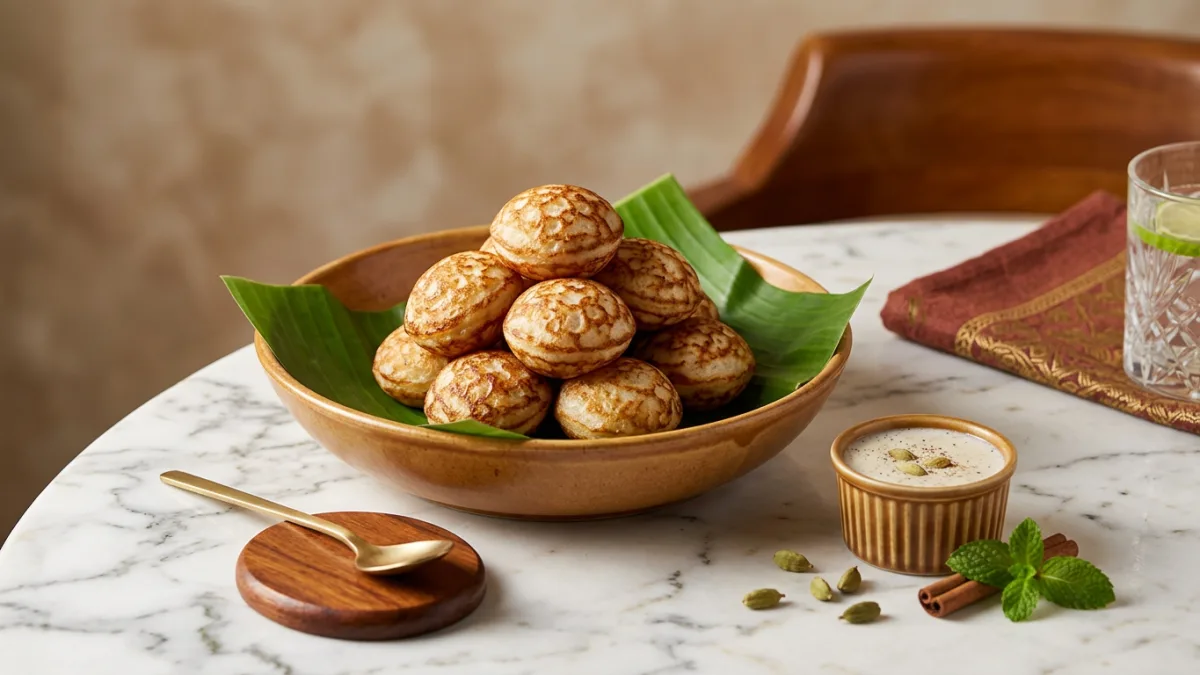
Vitumbua vya Mchele
These pillowy, lightly fermented rice-flour pancakes are a treasured morning tradition across Zanzibar's coastal markets, eaten warm from a special dimpled iron pan called a karai la vitumbua. The overnight fermentation gives the batter a subtle tang and remarkable airiness, while coconut milk lends a quiet sweetness and golden, lacey edges. Each small round is crisp on the outside and cloud-soft within — perfect alongside spiced chai.
Ingredients
300 g raw white rice
soaked in cold water overnight (minimum 8 hours), drained
200 ml full-fat coconut milk
at room temperature
7 g active dry yeast
1 sachet, dissolved in 60 ml warm water with a pinch of sugar for 10 minutes
60 g caster sugar
0.5 tsp fine salt
0.5 tsp ground cardamom
120 ml warm water
approximately 38°C, used to adjust batter consistency
30 ml neutral vegetable oil
for greasing the mold
Prepare Steps
- 1
Grind the soaked rice(5m)
Drain the overnight-soaked rice thoroughly. Transfer to a high-powered blender. Add coconut milk and blend on high speed for 3 minutes, scraping down sides twice, until the batter is very smooth with no visible rice granules. The texture should resemble thick cream. You may need to add up to 60 ml warm water to facilitate blending.
- 2
Mix batter and ferment overnight(10m)
Pour the blended rice-coconut mixture into a large bowl. Add the proofed yeast mixture, sugar, salt, and cardamom. Whisk thoroughly until fully incorporated. The batter should be pourable — similar to thick pancake batter. Add warm water tablespoon by tablespoon to reach this consistency if needed. Cover the bowl tightly with plastic wrap and leave at warm room temperature (24–28°C) for a minimum of 8 hours or overnight. The batter will rise noticeably and develop small bubbles on the surface.
- 3
Check and stir the fermented batter(2m)
After fermentation, the batter should have risen, smell slightly tangy, and be dotted with bubbles. Gently stir from the bottom to reincorporate any settled starch. Do not over-stir — you want to preserve some of the aeration. If the batter has thickened significantly, whisk in 2–3 tbsp warm water to restore a thick-pouring consistency.
Cook Steps
- 1
Heat the vitumbua mold(3m)
Place the aebleskiver pan or dimpled vitumbua mold over medium heat. Allow it to heat for 3 minutes until uniformly hot. Using a pastry brush or folded paper towel held with tongs, coat each cavity generously with vegetable oil. The oil should shimmer immediately on contact with the pan.
- 2
Fill and cook first side(4m)
Using a small ladle or large spoon, fill each cavity three-quarters full with batter — do not overfill or the vitumbua will not dome properly. The batter should sizzle gently upon contact. Cook undisturbed on medium heat for 3–4 minutes. Watch for the edges to set and turn opaque, and small bubbles to appear on the surface.
- 3
Turn and cook second side(3m)
Using a thin wooden skewer or chopstick, gently insert it into the side of each vitumbua and rotate 180 degrees so the cooked golden base faces upward. If the vitumbua are properly set, they will flip cleanly. Cook the second side 2–3 minutes until uniformly golden and a skewer inserted in the center comes out clean with no wet batter. Remove to a wire rack. Repeat with remaining batter, re-oiling between each batch.
Serve Steps
- 1
Rest briefly and arrange(2m)
Allow vitumbua to cool on a wire rack for 2 minutes — they firm slightly as they cool and the interior becomes fluffy rather than doughy. Arrange on a flat plate or banana leaf in a single layer, never stacked, to preserve the crisp exterior.
- 2
Serve with chai(30s)
Serve warm alongside heavily spiced Zanzibar chai (spiced black tea with ginger, cardamom, and cinnamon). Vitumbua are traditionally eaten plain, but a light dusting of powdered sugar or a drizzle of honey is a welcome modern touch. Best consumed within 30 minutes of cooking.