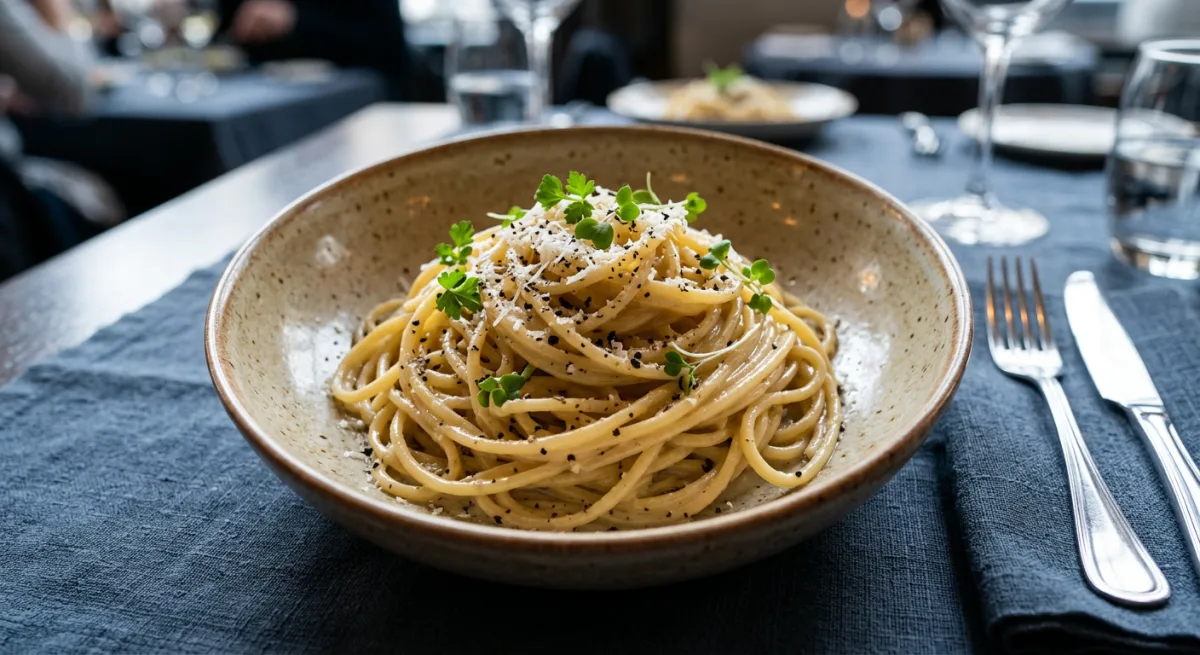
Cacio e Pepe
Rome's most deceptively simple masterpiece — just three ingredients transformed through technique into a glossy, intensely savory pasta that coats every strand with a silky emulsion of aged Pecorino Romano and assertive black pepper. The magic lies entirely in the method: a controlled marriage of starchy pasta water and finely grated cheese that creates a sauce with no cream, no butter, no shortcuts. Served tableside in a warm bowl, this is minimalism elevated to high art.
Ingredients
400 g tonnarelli pasta (or thick spaghetti)
uncooked
220 g Pecorino Romano DOP
finely grated on a microplane, kept at room temperature
60 g Parmigiano-Reggiano 36-month
finely grated on a microplane, kept at room temperature
10 g black peppercorns
coarsely cracked in a mortar — mix of medium and coarse textures
18 g kosher salt
for pasta water — less than usual as Pecorino is very salty
3 liters water
for boiling pasta
Prepare Steps
- 1
Grate the cheeses(8m)
Using a fine microplane, grate 220 g Pecorino Romano and 60 g Parmigiano-Reggiano into a wide, shallow bowl. The texture must be powder-fine — any coarse shreds will cause the sauce to clump. Combine both cheeses and set aside at room temperature. Cold cheese is the leading cause of sauce failure.
- 2
Crack the black pepper(3m)
Place 10 g whole black peppercorns in a mortar and crack with a pestle to a rough, uneven texture — aim for a mix of coarse shards and medium grains, not a fine powder. Alternatively, use the bottom of a heavy skillet on a cutting board. The uneven texture creates layers of pepper heat in the final dish.
- 3
Set up the cheese slurry station(2m)
Have your wide bowl of grated cheese ready next to the stove. You will need a ladle for pasta water and tongs or a pasta fork for tossing. Warm the serving bowls by filling them with hot water — drain just before plating. Everything must happen quickly once the pasta is cooked.
Cook Steps
- 1
Bloom the black pepper(3m 30s)
Place a large, wide stainless steel or carbon steel skillet (28–30 cm) over medium heat. Add all the cracked black pepper and toast dry, shaking the pan constantly, for 90 seconds until fragrant and just beginning to smoke lightly. Add 60 ml of cold water to the pan to stop the toasting and create a pepper base. Swirl and reduce until the water is almost completely evaporated, leaving the pepper just moist. Remove from heat.
- 2
Boil the pasta in lightly salted water(10m)
Bring 3 liters of water to a rolling boil in a large pot. Add 18 g kosher salt — this water should taste mildly salty, not like the sea, as the cheese will contribute significant saltiness. Add the tonnarelli and cook, stirring frequently, until 2 minutes short of the package al dente time — the pasta will finish cooking in the pan. Reserve at least 400 ml of starchy pasta cooking water before draining.
- 3
Build the cheese emulsion(3m)
While the pasta cooks, add 3 tablespoons (45 ml) of the hot pasta water to the grated cheese bowl. Using a spatula or the back of a spoon, work the water into the cheese in a circular motion to form a thick, homogeneous paste — the consistency of smooth cream cheese. This paste is the foundation of the emulsion. Add another tablespoon of hot pasta water if needed. The paste should be fluid enough to flow slowly when the bowl is tilted.
- 4
Toss the pasta with pepper(1m 30s)
Return the pepper skillet to medium-low heat. Using tongs, transfer the drained pasta directly into the skillet (do not rinse). Add 80 ml of hot pasta water to the pan. Toss vigorously for 60 seconds, allowing the pasta to absorb the pepper-infused water and the surface starch to activate. The liquid in the pan should reduce to a light glaze coating the strands.
- 5
Incorporate the cheese emulsion(2m)
Remove the skillet from heat entirely — this is critical. Pour the cheese paste over the hot pasta. Using tongs, toss rapidly and continuously, adding hot pasta water one tablespoon at a time (up to 100 ml total additional water) to achieve a fluid, glossy sauce that coats every strand without clumping. The residual heat from the pasta melts the cheese; direct heat will cause it to seize. Toss for 90–120 seconds until the sauce is smooth, glossy, and clings to the pasta. The finished pasta should flow slightly when the pan is tilted.
Serve Steps
- 1
Twirl and plate immediately(1m)
Working quickly, use tongs to twirl a generous portion of pasta into a nest and place in the center of each pre-warmed bowl. The pasta must be plated within 60 seconds of finishing — it tightens rapidly as it cools.
- 2
Finish and serve(30s)
Finish each bowl with a light dusting of additional Pecorino Romano, a pinch of the reserved cracked black pepper, and serve immediately. No olive oil, no garnish — the integrity of this dish depends entirely on restraint. Offer extra grated Pecorino on the side.